Demanding Accountability, Challenging Oppression, Advancing Liberatory Praxis: A 20+ Year Legacy
LBHC 2025 invites participants to engage in critical dialogue and shared strategies that confront power and privilege at the intersections of ability, age, class, citizenship, ethnicity, gender, race, and other identities of lived experiences.
Program for SOCIAL WORK, AAMFT, COUNSELING & EDUCATION
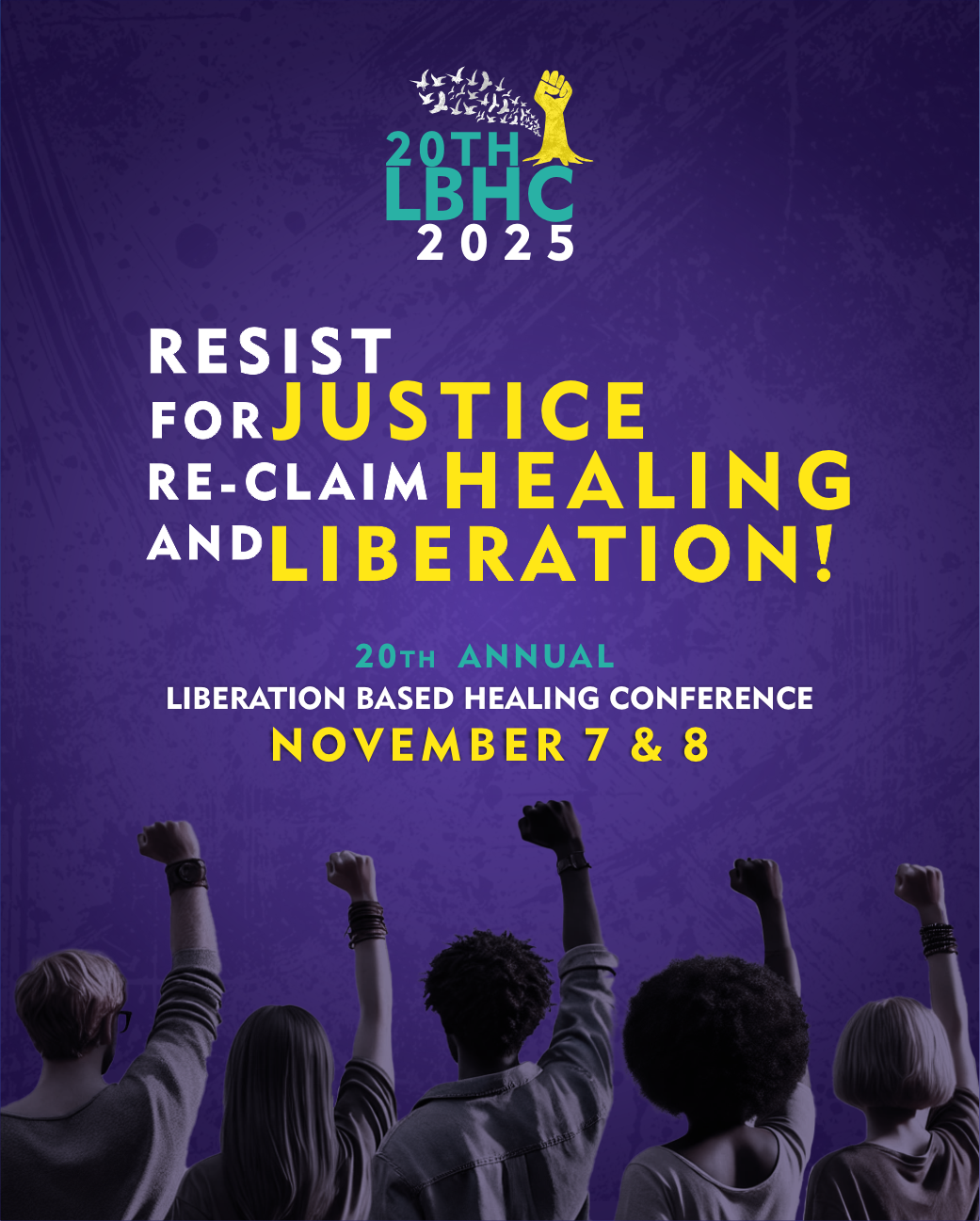
November 7 and 8, 2025
Learning Objectives
1. Illuminate the Ongoing Legacy of Colonial Structures in Healing, Education, and Knowledge Systems
Trace and contextualize how coloniality and racialized power structures have historically shaped—and continue to shape—therapeutic perspectives, educational systems, and institutional frameworks.
2. Explore Intersectional Lived Realities Through a Decolonial Lens
Engage with the complexity of intersectional identities—across race, caste, class, gender, sexuality, ability, migration status, and more—as they relate to lived experiences of marginalization and survival. Reflection on how these identities are shaped, how they impact community well-being, intergenerational trauma, and access to liberatory mental health and education.
3. Integrate Decolonial Practices into Everyday Praxis and Collective Healing
Identify and apply community-rooted, culturally grounded, and liberatory tools that support healing, reclamation, and resistance. Participants will gain frameworks and strategies they can implement in educational, therapeutic, and communal spaces to dismantle dominant paradigms and foster radical care, solidarity, and collective liberation.
Total NJ & NY CEUs (Day 1 & Day 2): 15
Full Agenda: November 7, 2025 (Day 1)
Day 1 Total NJ & NY CEUs: 7.5
MC: Kim Mackanic, LCSW
MUSIC:
9:00 am-9:15 am (15 min) – Welcome Remarks
Speakers: Rhea V. Almeida
9:15 am-9:30 am (15 min) – Honoring Indigenous Practices
CEU Type: Remembering History
9:30 am-11:00 am (90 min) – Panel 1: Community Building, Resilience, & Liberatory Healing
Moderator: Michelle Baek, MSW
Speakers: Nathalie Edmond, PsyD, Tanisha Christie, MA, LCSW, & J. Maria Bermudez, PhD
CEU Type: Clinical & Community Engagement
Abstract: Mainstream organizations, structures, and systems have historically centered knowledge systems and healing modalities that isolate and “otherize” individuals from their lived contexts. To address the ever-growing injustices, particularly within the mental health space, it is critical to embrace and wield systems that instead create equitable systems for individuals and communities seeking care. This panel will navigate some of these cherished notions of change and discuss the quickly-expanding reach of liberatory services, including but not limited to educational dialogue and therapeutic application. Panelists will discuss the growing demand for justice-oriented approaches to knowledge-building and healing, as well as offer decolonial methods of
organizational change, with the aim of penetrating the well-ensconced systems of coloniality within mental health.
Specific Learning Objectives:
- Locate and Challenge Mainstream Mental Health Systems: Understand how complexities of traditional Western research methodologies adversely shape mental health practices.
- Highlight Trend of Growing Liberatory Emphasis: Highlight the increasing need for diverse and expansive liberatory service deliveries to address the lived realities of today.
- Provide Applied Liberatory Strategies: In keeping with decolonial approaches to research and practice, participants will be offered groundbreaking liberatory ideas on how to create and implement therapeutic practices that center larger community healing.
Q&A: 10:30 am-11:00 am
11:00 am-12:15 pm (75 min) - Panel 2: Criminalized from the Start: Youth, Race, and the Architecture of Injustice
Moderator: Caroline Hann, LCSW
Student Speakers: Jacqueline Crovella, Tiffany Moreno, Catherine Navas, Alex Ojeda, EdD, & MOSAIC
CEU Type: Clinical & Ethics
Abstract: The current justice or “injustice” system capitalizes on the racialization and subsequent criminalization of BIPOC youth. Such structural designs in the system veil and legitimize the subjugation of youth and further perpetuate the devastating juvenile prison pipeline. Liberatory praxis calls for an examination of the very design of punitive legal measures, as well as alternate pathways for educational and life choices. This panel first offers a broader analysis of the current justice system before examining examples of university-based healing initiatives that center community-based mentorship and leadership opportunities as integral components for the challenging and resistance of structural injustice.
Specific Learning Objectives:
- Highlight Oppressive Structural Designs: Emphasize the systemic design of injustice within the justice system, which extends far beyond a deviation from care.
- Discuss Methods toward Personal and Community Healing: Discuss specific university programming that centers youth justice and healing through creative community-building perspectives.
Q&A: 11:45 am-12:15 pm
12:15 pm-12:45 pm (30 min) - Lunch
12:45 pm-2:25 pm (100 min) – Panel 3: Learning in Lockdown: Justice Work Amid Educational Injustice
Moderator: Rhea V. Almeida, LCSW, Ph.D
Speakers: Wilson Okello, PhD, Mayida Zaal, PhD, David Stovall, PhD, & Aja Reynolds, PhD
CEU Type: Clinical & Activism
Abstract: As the current presidential administration implements its strategy of distraction and destabilization to achieve its goals of facism and the end of the movement toward racial justice, we are faced with challenges that may feel new, but actually are not. Legalized kidnapping by immigration enforcement, criminalization of the LGBTQAI+ community, repression of political speech and the attempt to silence critical perspectives in education have many of us feeling fatigued and spent. At the same time, numerous communities have been mobilizing to change their conditions despite the political moment. As a community committed to liberation through healing, panel members will discuss strategies from their respective locales used to continue the process of building what our communities need.
Specific Learning Objectives:
(1) Highlight Recurring, Systemic Patterns: Contextualize and analyze the deeply-rooted systemic patterns and structures of coloniality that continue to be maintained by the ruling classes.
(2) Examine Critical Dialogue in Spaces: Discuss how the silencing of justice-oriented and liberated perspectives further silo educational spaces from critical dialogue on current realities.
(3) Provide Strategies for Continued Healing: Offer and discuss strategies for communities to continue collaboratively centering healing and justice within education sites for their futures.
Q&A: 1:55 pm-2:25 pm
2:25 pm-2:35 pm (10 min) - Break
2:35 pm-3:05 pm (30 min) - Panel 4: Beyond Conflation: Decentering Zionism While Confronting Antisemitism
Moderator: Kelly Kim, MA
Speakers: David Surrey, PhD
CEU Type: Ethics
Abstract: This panelist will speak to our collective witnessing of how accusations of antisemitism are increasingly weaponized to suppress anti-Zionist education and activism. He will examine the escalating efforts to silence pro-Palestinian voices—highlighting the moral and political courage behind student-led divestment campaigns, the beauty and vitality of campus encampments, and the chilling effects of their subsequent criminalization. He will share the tension of engaging with institutional donors who threaten to withdraw funding in response to Palestine solidarity work, and the emotional spectrum that accompanies these struggles—from the joy of solidarity to the pain of betrayal, erasure, and institutional complicity. Particular attention will be given to the profound sense of silencing and fear experienced by Palestinian communities, as well as by Jewish and other allies who refuse to be silenced in their pursuit of justice.
Specific Learning Objectives:
- Establish Historical Context: Provide attendees with a historical and current occupation of Palestinian lands.
- Define Key Terms: Define the difference between anti-Semitism and anti-Zionism.
- Examine Systemic Repercussions: Understand the structural impact of anti-Palestinian racism, dehumanization, and a staggering disposability of Palestinian life.
- Highlight Liberatory Methods: Identify strategies used by students, youth, and advocates to support options for autonomy and liberation for children and families of Palestinian identities.
Q&A: 2:55 pm-3:05 pm
3:05 pm-3:15 pm (10 min) - Break
3:15 pm-4:45 pm (90 min) – Panel 5: Sacred Entanglements: Reimagining Human-Planetary Futures through Healing Praxis
Moderator: Eunjung Ryu, PhD
Speakers: Vishanthie Sewpaul, PhD, V. Kalei Kanuha, PhD, & Anne Deepak, PhD
CEU Type: Community Engagement & Clinical Strategies of Empowerment and Accountability
Abstract: This panel explores transformative pathways toward just and sustainable human-planetary futures through the lens of healing praxis. Drawing from the Social and Solidarity Economy, anti-violence abolitionist work, and the global vision of the Eco-Social World Charter, we center liberatory practices that bridge ecological justice and social healing. Panelists will examine the role of worker cooperatives, community-centered care, and liberatory frameworks in dismantling structural violence and envisioning futures grounded in collective well-being, equity, and planetary stewardship. Through this dialogue, we seek to cultivate new imaginaries and actionable strategies for building interdependent futures that honor both human dignity and the Earth.
Specific Learning Objectives:
- Analyze the Intersections of Ecological Justice and Social Healing: Participants will be able to identify and critically examine how liberatory practices—such as those rooted in the Social and Solidarity Economy and abolitionist frameworks—interweave ecological justice with collective healing to challenge systems of structural violence.
- Evaluate the Transformative Potential of Community-Based Alternatives: Participants will explore the roles of worker cooperatives, community-centered care models, and non-extractive economies as viable strategies for promoting equity, mutual aid, and planetary sustainability.
- Develop Actionable Frameworks for Interdependent Futures: Participants will formulate and reflect on strategies inspired by the Eco-Social World Charter and healing praxis that support the co-creation of just, sustainable, and interdependent futures grounded in human dignity and environmental stewardship.
Q&A: 4:15 pm-4:45 pm
4:45 pm-5:00 pm (15 min) - View Clip: The Death and Life of Marsha P. Johnson
CEU Type: Clinical & Activism
Full Agenda: November 8, 2025 (Day 2)
Day 2 Total NJ & NY CEUs: 7.5
MC: Deja Amos
MUSIC: Elizabeth Matticoli
9:00 am-9:10 am (10 min) – Welcome Remarks and Opening Dr. Jose Cruz
Performance
- Performer: TBD
- CEU Type: Remembering History
9:10 am-10:40 am (90 min) – Panel 1: Liberatory Healing Through Art: Co-Creating Pathways Beyond Words
Moderator: Kim Mackanic, LCSW
Speakers: Tej Hazarika & Anurima Kumar
CEU Type: Advocacy & Ethics
Abstract: This panel centers liberatory healing practices that use art as a transformative medium for self-expression, cultural affirmation, and collective care. Through co-creation among artists, therapists, educators, and community members, participants access visual languages that transcend the limits of spoken words—especially in contexts marked by trauma, marginalization, and systemic oppression. Presenters will share their art that reflects their intersectional paths where art becomes a conduit for truth-telling, resistance, and hope. This session invites practitioners and educators to explore how art-based approaches can disrupt dominant paradigms and cultivate healing spaces rooted in agency, creativity, and justice.
Specific Learning Objectives:
- Examine Art as a Liberatory Tool: Understand how art-making can serve as a liberatory tool for individuals and communities navigating trauma, oppression, and systemic silencing.
- Consider Cross-Community Collaboration: Explore interdisciplinary and culturally affirming approaches to co-creation between artists, educators, and therapists that center community wisdom and resilience.
- Empower Healing through Art Strategies: Apply visual art strategies that foster agency, connection, and hope within therapeutic, educational, and community-based healing settings.
Q&A: 10:10 am-10:40 pm
10:40 am-10:50 am (10 min) - Break
10:50 am-12:20 pm (90 min) – Panel 2: Rural Resistance: Building Power with Queer and Trans Youth
Moderator: Darla Linville, PhD
Speakers: Downeast Rainbow Alliance: Cheyenne Robinson-Bauman & Beana Hopkins
CEU Type: Advocacy & Community Building
Abstract: Since 2016, rural United States has gotten more politically conservative, and divisive rhetoric has been used to demonize trans youth, their parents, and other adults who recognize and welcome youth gender identities and expressions. Through state legislation, school board elections, and executive orders queer and trans youth have experienced a reversal of access and justice previously gained. Examples of how to persistently and insistently align with youth are needed. This panel offers an example of a rural county in which adults who work with youth have collaborated to create a network of service providers who welcome queer and trans youth and advocate for more inclusive spaces through their professional and personal connections. Through partnerships with schools, mental health providers, healthcare workers, tribal organizations, art spaces, and young people, the Downeast Rainbow Alliance raises awareness, provides visibility, and educates about the needs of queer and trans youth. In this session, you will learn about the legislative and policy changes that have affected queer and trans youth, the history of developing the Downeast Rainbow Alliance through community listening sessions, and the content provided in free trainings offered quarterly. Discussion of successes and failures will facilitate learning in the session.
Specific Learning Objectives:
- Place Historical Context: Discuss the impact and interference of executive and legislative orders on queer and trans youth safety in public spaces and communities.
- Establish a Pathway for Protection and Advocacy: Consider a specific example of pathways within rural communities that center lived experiences of queer and trans youth and challenge systemic structures that threaten such.
- Advance Future Pathways: Discuss the application of present, and future, training modalities by cross-disciplinary communities for continued centering of queer and trans youth towards safety and healing.
Q&A: 11:50 am-12:20 pm
12:20 pm-12:50 pm (30 min) - Lunch
12:50 pm-3:05 pm (135 min) – Panel 3: From Shelter Roots to Liberation Praxis: Reimagining BIPs Through Family, Community, and Ancestral Belonging
Moderator: Carolyn Tubbs, PhD
Speakers: David Garvin, MSW, LMSW, Oliver Williams, PhD, Juan Carlos Areán, PhD, Rhea Almeida, PhD, LCSW, Gene Johnson, Bob Geffner, PhD, V. Kalei Kanuha, PhD, & Dominique Waltower
CEU Type: Clinical
Abstract: This panel interrogates the evolution of Batterer Intervention Programs (BIPs), tracing their lineage from the feminist-led shelter movement to their current emergence within broader liberation-based healing frameworks. While BIPs have historically centered the individual who causes harm, transformative practices now reframe accountability by redrawing the boundaries of healing to include family, community, and ancestral belonging. Panelists—scholars and practitioners grounded in abolitionist, decolonial, and liberatory-rooted praxis—will examine the critical shift from isolating the harming person to contextualizing harm within structural violence, inherited trauma, and intergenerational disconnection. They will share models of accountability that operate beyond carceral systems, centering relational repair, interdependence, and collective systems change. Together, we will engage questions anchored in decolonial and liberatory praxis: Can foundational practices hold the complexity of harm while honoring familial, communal, and ancestral memory? How do we scale interventions without reproducing carceral systems of coloniality? And how might transformation be measured through collective shifts in power, healing, and relational accountability—beyond individualized outcomes? This dialogue reimagines BIPs not as static interventions, but as evolving ecosystems of repair—rooted in resistance, ancestral knowledge, and the visionary leadership of those most impacted by gendered and structural violence.
Specific Learning Objectives:
- Critically Trace the Historical and Ideological Evolution of Batterer Intervention Programs (BIPs): Participants will analyze how BIPs have developed from their feminist-shelter movement origins into conventional practices to liberation-based frameworks, and assess the tensions and possibilities within that trajectory.
- Examine Decolonial and Abolitionist Approaches to Accountability and Harm: Participants will explore models of healing that contextualize harm within structural and intergenerational violence, challenging carceral responses and centering relational, community-rooted practices.
- Interrogate the Role of Ancestral Memory and Communal Belonging in Healing Praxis: Participants will reflect on how future BIP models can be reimagined through frameworks that integrate family, ancestry, and lived experiences as vital components of transformation.
- Develop Strategies for Scaling Liberatory Practices Without Reproducing Systems of Dominance and Oppression: Participants will engage with questions of implementation, evaluation, and sustainability—considering how to expand these interventions while maintaining their decolonial, relational, and transformative foundations.
Q&A: 2:35 pm-3:05 pm
3:05 pm-3:15 pm (10 min) - Break
3:15 pm-4:45 pm (90 min) – Panel 4: From the Rubble, Resistance: Palestinian Visions for Global Liberation
Moderator: Mayida Zaal, PhD
Speakers: Rania Mustafa & Zahra Billoo, Esq
CEU Type: Community Building & Clinical Strategies for Change
Abstract: Since October 2023, we have witnessed an exponential increase in anti-Palestinian racism, dehumanization, and a staggering disposability of Palestinian life. Efforts to bring attention to decades of oppression, racism, settler-colonial and gendered violence against Palestinians have been met worldwide with repression, police violence, and the weaponization of antisemitism to justify an ongoing genocide and ethnic cleansing campaign. These colonial systems have penetrated academic, workplace, and activist spaces, invoking a familiar, yet consistently devastating, pattern of silencing and punishment through means of suppression of speech and workplace retaliation. In keeping with efforts to challenge oppressive narratives and encourage community healing, this panel examines the multifaceted work of the Palestinian American Community Center (PACC) as a vital institution advancing justice through education, political action, and community engagement. The session will highlight personal narratives and video stories that illustrate PACC’s impact, showcasing lived experiences of solidarity in action. This panel additionally approaches community healing and advocacy through an intersectional legal lens at CAIR New Jersey, one that centers Muslim American empowerment and civil rights across all public domains.
Specific Learning Objectives:
- Center Ongoing Silencing: Place historical and current context for the ways in which colonial organizations, structures, and systems continue to retaliate against and infringe upon the civil rights of individuals and communities.
- Provide a Case Study for Community Justice: Discuss the programs, civic initiatives, and scholarship developed by a community center to engage and partner with its local community.
- Emphasize Ongoing Legal Advocacy: Highlight examples of legal and legislative advocacy initiatives spearheaded by a non-profit organization.
Q&A: 4:15 pm-4:45 pm
4:45 pm-5:00 pm: Closing Ceremony: Poetry Performance
Performer: Justice Ameer
CEU Type: Clinical & Community Empowerment